
Key Takeaway
A trauma response in the body is an automatic physical reaction that occurs when your nervous system reads a cue as dangerous, even when nothing threatening is happening. Because that detection runs faster than conscious thought, understanding the situation is not enough to stop it. Reducing hypervigilance means retraining the nervous system to recognize present-day safety, not arguing with it.Why This Matters
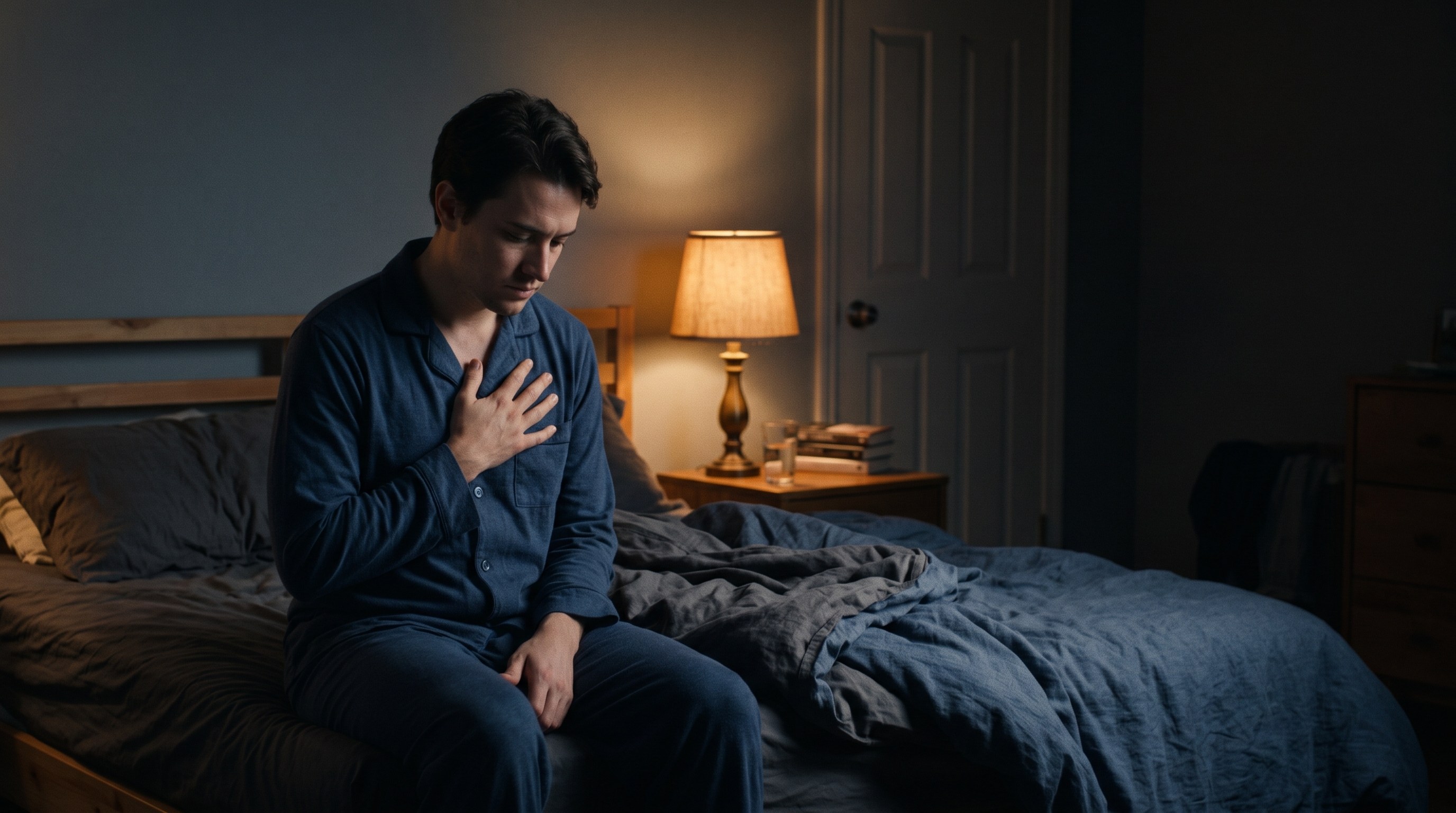
Your heart pounds when your phone buzzes with an unknown number. Your shoulders lock when someone raises their voice two rooms away. Your stomach drops at a particular tone in an email. You know, logically, that nothing bad is happening, and your body reacts as though it is.
If you have ever wondered why you cannot simply calm down when you already understand there is no real danger, the explanation is not a lack of willpower or insight. Your nervous system is doing precisely what it learned to do. This article explains what a trauma response in the body actually is, why hypervigilance can outlast the situation that created it, and how to begin working with your body rather than against it.
What Is a Trauma Response in the Body?
A trauma response in the body is an automatic physical reaction that occurs when your nervous system perceives a threat, including when that threat is not actually present. These reactions arrive faster than conscious thought because they are produced by survival circuitry rather than by reasoning.
The amygdala, one of the brain’s threat-detection structures, is built to react first and evaluate afterward. After overwhelming experiences, that system can become more sensitive, treating ordinary moments as if they required an emergency response: a slammed door, a certain tone of voice, a crowded room, a silence that lasts a beat too long.
The Nervous System’s Job Is Detecting Danger
Your autonomic nervous system continuously scans your environment and your body for cues of safety or danger. Researchers call this process neuroception, described as the neural process by which safety and threat are detected without conscious awareness (Porges, 2025). Because this scanning happens below awareness, you can feel unsafe before you can explain why.
After a traumatic experience, that detection system does not always reset on its own. It is often recalibrated toward danger, reading neutral information as a warning long after the original threat has ended. Nothing about that is irrational. It is a system that learned to prioritize speed over accuracy because, at one point, speed mattered more.
How a Trauma Response Differs From Ordinary Stress
It helps to separate everyday stress from a trauma response, because the two are managed differently:
- Ordinary stress usually has a clear, identifiable cause you can point to.
- A trauma response often feels disproportionate or confusing, including to the person experiencing it.
- Ordinary stress fades once the situation ends, and the body returns to baseline within minutes or hours.
- A trauma response can be set off by something unrelated to actual danger and may take far longer to settle, sometimes the rest of the day or longer.
If you regularly find yourself recovering from reactions that seem larger than the event that prompted them, that pattern is worth understanding rather than criticizing yourself for.
Why Hypervigilance Continues After the Danger Has Passed
Hypervigilance is one of the most exhausting features of a dysregulated nervous system. It is the experience of constantly scanning: reading faces for disapproval, noticing exits, tracking the mood of a room, anticipating conflict before there is any evidence of it. It can look like competence from the outside and feel like never being off duty from the inside.
This state develops because the nervous system learned that danger could appear without warning. Staying alert was the most reliable protection available at the time. When that lesson is reinforced often enough, vigilance stops being an occasional response and becomes the default setting.
How the Body Holds What the Mind Cannot Recall
Trauma is not stored only as narrative memory. It is also held somatically, in muscle tension, breathing patterns, posture, and the regulation of stress hormones. This is why people can have a full-body reaction to a trigger without consciously remembering an originating event, and why the reaction can arrive before any thought does.
The important point is this: the body can respond to danger cues even when no clear memory is attached to them. That is a feature of how overwhelming experience is processed, not evidence that something is wrong with you or that you are inventing the reaction.
Triggers That Do Not Seem Logical
Triggers rarely make sense from the outside, because they are built from sensory and emotional associations rather than facts. Common examples include:
- A particular smell, song, or tone of voice
- Being touched unexpectedly, even gently and by someone you trust
- Sudden loud noises, or the silence that follows conflict
- Feeling trapped, dismissed, criticized, or unable to leave
- Certain facial expressions, postures, or a delayed reply
Noticing which cues activate you is useful information. It tells you what your nervous system has classified as a warning sign, which is where the work of updating that classification begins.
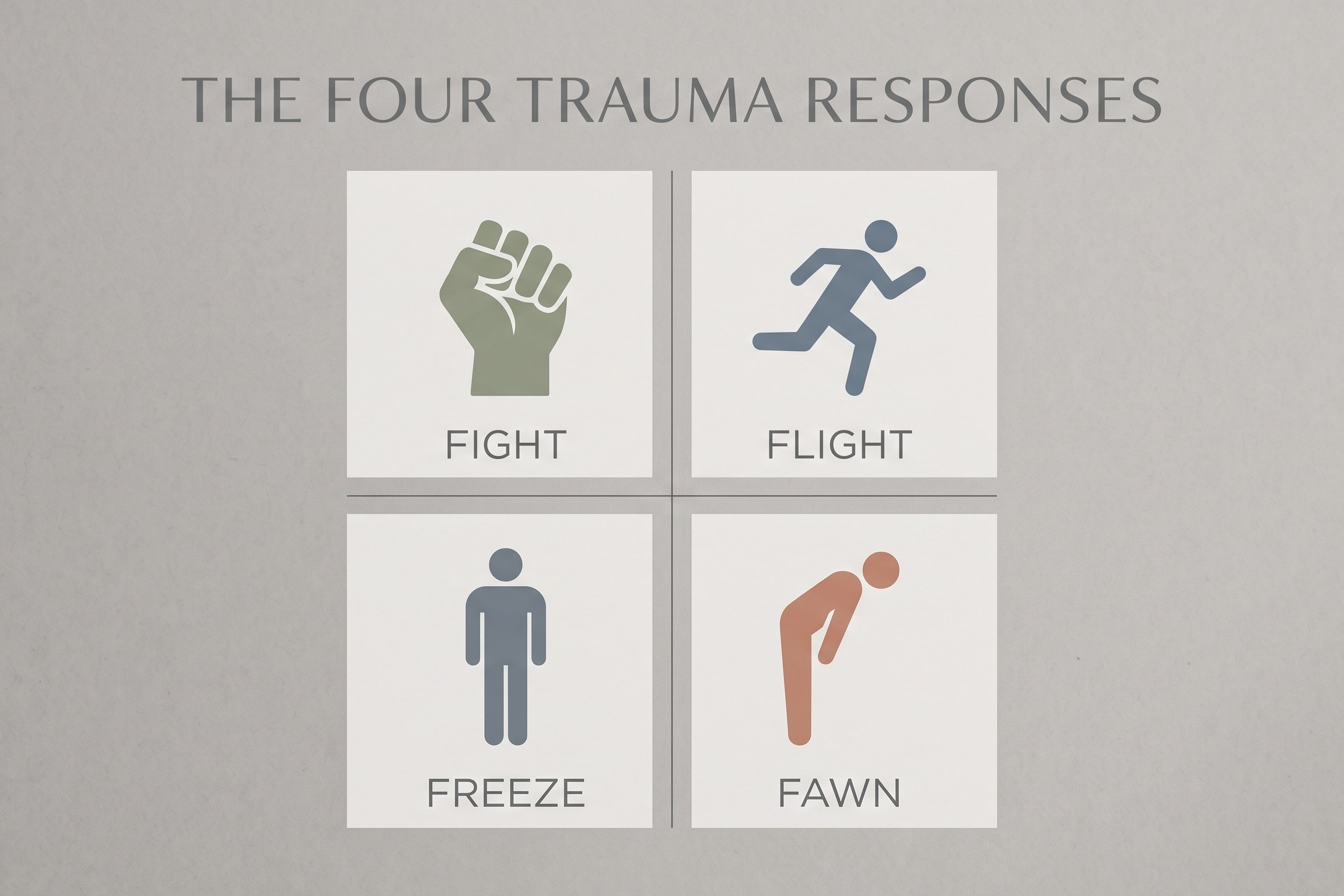
Recognizing Your Pattern: Fight, Flight, Freeze, and Fawn
Trauma responses tend to fall into four broad patterns. Most people have one or two defaults, though the pattern can shift depending on the relationship, the setting, and how depleted you are. Recognizing which one shows up for you is often the first step toward catching it early enough to do something different.
Fight
Physically, this can appear as a clenched jaw, tight fists, heat in the chest, and a racing heart. Emotionally it registers as irritability, anger, or defensiveness. Behaviourally it can look like arguing, correcting, controlling details, or moving toward confrontation to resolve the uncertainty faster.
Flight
The body becomes restless: shallow breathing, tension in the legs, an urge to move. The emotional experience is anxiety, urgency, or panic. Behaviourally this can look like avoidance, leaving conversations, filling every hour, or overworking, which is one reason this pattern is so often mistaken for ordinary ambition.
Freeze
This shows up as numbness, heaviness, a sense of being far away from yourself, or difficulty finding words. Emotionally it can feel blank, foggy, or full of dread with no clear object. Behaviourally it looks like shutting down, going quiet mid-conversation, or losing time.
Fawn
The body stays tense while the face stays pleasant: a knot in the stomach, a held breath, a smile that does not match the internal state. Emotionally it is anxiety about someone else’s reaction, along with guilt. Behaviourally it looks like over-apologizing, agreeing quickly, managing other people’s moods, and noticing your own needs only long after the conversation has ended.
None of these are character flaws, and none of them are choices you are making badly. They are strategies that once worked.
What Happens in the Nervous System
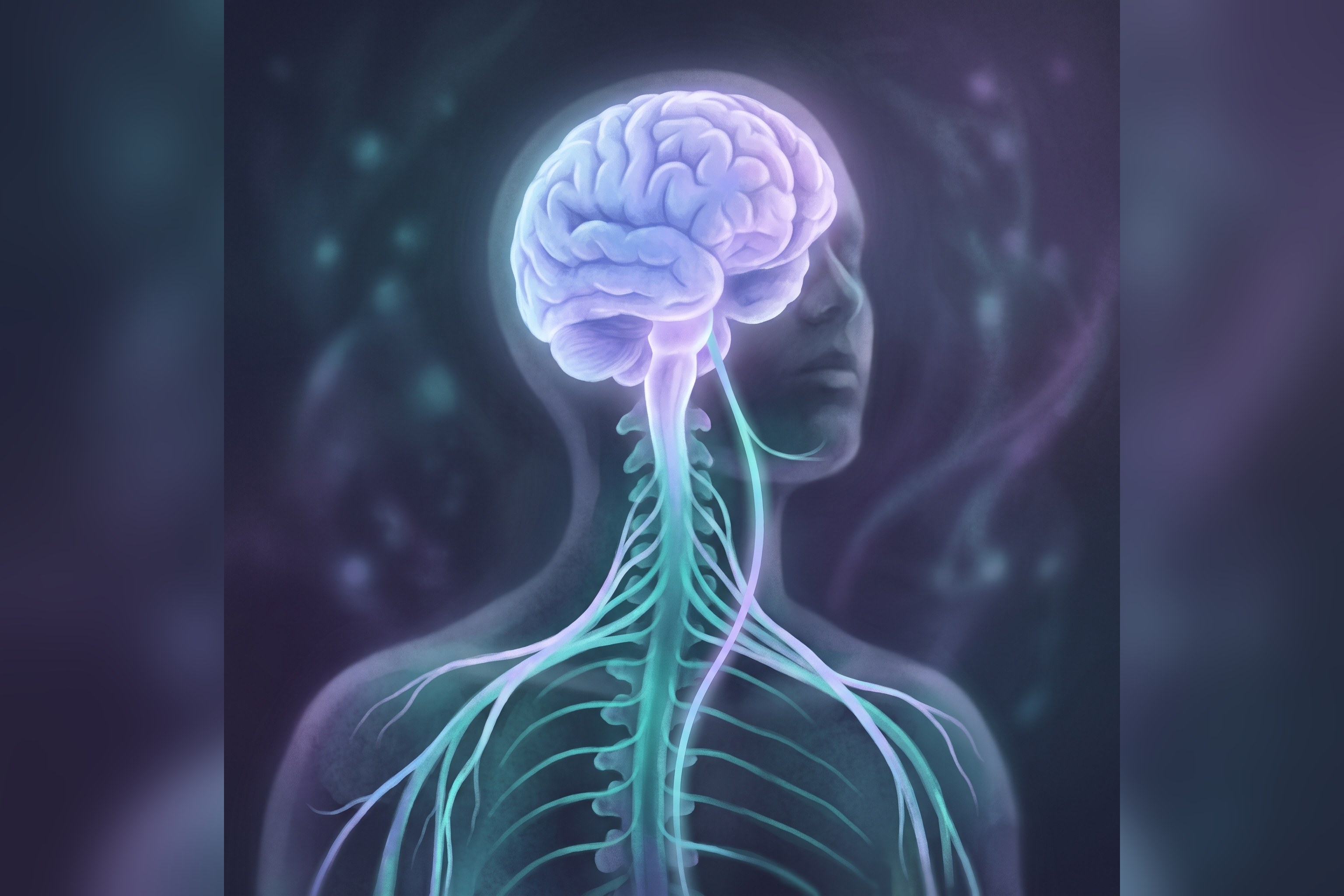
Polyvagal theory, developed by Dr. Stephen Porges, offers one widely used framework for why these responses feel involuntary. It describes a hierarchy of autonomic states supported by the vagus nerve, moving between social engagement and calm, mobilization and defence, and immobilization or shutdown, with the system regressing under threat and restoring through cues of safety and connection with others (Porges, 2025). The theory continues to be debated among researchers, particularly regarding how autonomic tone is measured, but it remains a clinically useful way to describe states most people recognize immediately in themselves.
Sympathetic and Parasympathetic Activation
Your sympathetic nervous system drives mobilization: increased heart rate, faster breathing, muscles prepared to act. Your parasympathetic system supports rest, digestion, recovery, and connection.
After trauma, the nervous system can end up oscillating between sympathetic overdrive, experienced as hypervigilance, agitation, or panic, and a deeper parasympathetic shutdown, experienced as numbness, fatigue, or dissociation. What is missing is not calm as a personality trait. It is the regulated middle ground that makes calm accessible.
The Window of Tolerance
The window of tolerance describes the range in which you can think clearly, feel emotion without being overwhelmed, and respond rather than react. Trauma tends to narrow that window.
Inside your window, stress is uncomfortable but workable. Pushed outside it, into hyperarousal or shutdown, even a small cue can produce a reaction that seems entirely out of proportion to what is happening. This is also why the same situation can be manageable on a rested Tuesday and unbearable on a depleted Friday. The trigger did not change; your available capacity did.
How to Calm a Trauma Response and Reduce Hypervigilance
The aim is not to eliminate your alarm system. It is protective by design, and you want it. The aim is to help it recognize genuine safety again so it stops sounding at full volume for cues that no longer require it.
Body-Based Techniques You Can Practise

Because trauma responses are physical, cognitive strategies alone often do not reach them. Approaches that work directly with the nervous system tend to be more effective in the moment:
- Slow, extended exhales. Breathing out for longer than you breathe in supports parasympathetic activation and is one of the few levers you can pull deliberately.
- Grounding through the senses. Naming five things you can see, four you can hear, and three you can physically feel brings attention back to present-tense information.
- Orienting. Slowly turning your head and looking around the room, unhurried, gives the brain current evidence about where you actually are.
- Gentle movement. Walking, stretching, or shaking out your hands and arms helps discharge mobilization energy that has nowhere else to go.
- Predictable routines. Consistency is itself a safety cue for a nervous system that learned to expect the unpredictable.
These practices are most useful when rehearsed while you are calm. A skill you have only ever attempted at a nine is unlikely to be available the next time you reach a nine.
When Self-Regulation Is Not Enough
Regulation tools help you manage a moment. They are not a substitute for processing what created the pattern. If hypervigilance, flashbacks, avoidance, or shutdown are affecting your sleep, your work, or your relationships, working with a therapist can address the underlying pattern rather than only the symptoms.
Several approaches are designed for this. Somatic therapy works with sensation and nervous-system state so you can notice early signs of overwhelm and stay present long enough for a different response to become possible. Parts-based therapy helps make sense of the internal conflict between the part of you that wants closeness and the part that braces for harm. Cognitive behavioural therapy can address the interpretations and avoidance that keep the cycle in place. EMDR is another specific trauma-processing technique you may encounter elsewhere; at KDW, clinicians work in a trauma-informed way using relational, somatic, and parts-based methods.
Evidence for body-oriented trauma therapies is developing rather than settled. A scoping review of somatic experiencing concluded that findings on effectiveness are promising but require further support from unbiased randomized controlled research (Kuhfuß et al., 2021). That is a reasonable basis for trying an approach, and a reasonable basis for expecting your therapist to track whether it is actually helping you.
Common Questions About Trauma Responses
Why does my body react to things that are not dangerous?
Your nervous system learned to associate certain cues with danger. When the present moment contains one of those cues, the threat-detection system can activate on the old association before conscious thought has a chance to evaluate the actual situation.
Is hypervigilance the same as anxiety?
They are related but not identical. Anxiety typically involves worry about future outcomes. Hypervigilance is a nervous-system state focused on scanning the present environment for threat cues. Many people experience both, and anxiety and burnout frequently accompany a nervous system that has been running on alert for a long time.
Can the body heal from trauma responses?
The nervous system remains adaptable, a property called neuroplasticity. With consistent regulation practice and, in many cases, therapeutic support, it can learn new patterns and gradually widen the window of tolerance. Change is usually incremental rather than sudden.
Why do I feel fine mentally but still have physical symptoms?
Because trauma is stored somatically as well as cognitively. You can have made real sense of an experience and still carry the physical response to it, which is why tension, disrupted sleep, or a racing heart can persist after the story feels resolved.
How long does it take to reduce a trauma response?
There is no fixed timeline. It depends on the nature of the experience, how long the nervous system has been dysregulated, what support is available around you, and how consistent the practice is. Many people notice smaller shifts within weeks, with more durable change developing over months.
When to Seek Support
Consider professional support when hypervigilance is interfering with sleep or concentration, when you are avoiding places, people, or conversations to prevent a reaction, when shutdown is affecting your relationships, or when you can explain your pattern clearly and still cannot change it. You do not need a diagnosis, a dramatic story, or a specific memory to justify reaching out.
If you are currently unsafe, being harmed, or in crisis, immediate safety takes priority over this kind of processing work, and a clinician can help you identify the right next step without asking you to minimize what is happening.
KDW offers trauma and attachment therapy at our London, Ontario counselling office and through virtual therapy across Ontario. The work moves at a pace your nervous system can tolerate, which means building capacity and safety first rather than beginning with the hardest material.
Ready to Take the First Step?
A trauma response in the body is not a character flaw or an overreaction. It is a survival system operating on outdated information, still protecting you from something that has already passed.
If you are tired of feeling on edge in moments that should feel calm, a free 15-minute consultation is a place to describe what happens in your body, ask about the approach, and find out whether working with KDW is the right fit. You do not need to have it figured out before you reach out.
Speak With a Clinician
An article can help you name a pattern, but a clinical conversation is where that pattern can be understood in the context of your actual life. Schedule a free 15-minute consultation to ask questions before booking a full session.